Home Blog

THE INNER EDIT- The Papyri Connect way

0

The Inner Edit — A Writer’s Take

Writers know this: the first draft is never the final word.

It’s raw, honest, and unfinished. Just like us on most days, and life too!

As a writer and a poet, I revel in first drafts. I like the messiness, the uninterrupted flow of thoughts, and the freedom to let go of any preconceived notions of life and myself. It is an essential part of my creative process.

And then comes the editing part, the cuts, the highlights, the sudden realization of having written something you would have never thought of (you then realize it is a part of you; you have been hiding from!). The word placements and the sentence structures go for a total toss and spin. This often leads to the story or poem being turned upside down. And it is the most mind-churning and rewarding part of being a wanna be writer and poet! No matter what your experience or how long you have been writing, you are always starting over!

Anyways, I digress from the point I am trying to make. How about we turn this narrative into something that affects us all, but we often miss in the hurry and bustle of life’s business?

Us- our inner selves.

Isn’t it true that we evolve with our jobs, interests, and hobbies? Life also changes us. The internal shifts are subtle but present. How about we become more aware of these, as we plod through life? We are almost unconsciously self-editing ourselves daily, but are unaware. The minute shifts in behaviours, temperament, health habits, and our relationships with the world.

I like to call it –The Inner Edit.

The Inner Edit is where it gets interesting.

Article content

Let’s view this from a different lens. First as a writer, then as a human being. So deeply intertwined, it is so unnoticeable, but there! Writers are humans, and humans are writers of their destinies. A beautiful melding of possibilities! The outer edit twinning with the inner edit!

As a writer:

You pause. You reconnect with your intent. It is not just what you wrote, but why. Yes, the ever-important why! You reflect on the tone, the gaps, the parts that need more honesty or more kindness.

You don’t just edit for polish. You edit for truth. For alignment. For clarity.

AtPapyri Connect, we believe our inner worlds work the same way.

You reconnect with what matters. You reflect on what no longer fits. Then you realign. Gently, deliberately, without shame and in complete awareness. Add to this mix the shift and adjustment of presence. You are fully in the flow of knowing.

Writing is a tool. Editing is a process, be it the inner or outer. Both are paths to knowing yourself better.

You go back. You reread the moment. You cut the noise. You highlight the insight. You rewrite the belief. You track the growth. You realign the voice.

This isn’t self-critique. It’s self-clarity. Not fixing, but refining.

As writers, we learn to hold our stories lightly so they can breathe, bend, and become something deeper.

As humans, we can do the same.

And we are stories, aren’t we? As a poet, I visualized this scene and wrote this poem. Try to visualize this with me. Join in! Here we go:

The words danced,

Swirling, changing

Letters one by one

A whole new story

Written each time

The wonderful dance of words on a line, akin to the ever-changing tango of life.

A soft reminder, things change. Only the truth remains. We align; the universe also aligns.

At Papyri Connect, we treat this process with care, the kindness we owe to ourselves and each other.

Editing your words and editing your inner world often ask the same thing:

Start with truth. End with alignment.

We see life the same way. Your thoughts, choices, and beliefs – they’re all drafts. And every day offers you a chance to edit from within.

The Inner Edit isn’t about fixing yourself. It’s about realigning with your voice, your truth, your rhythm.

Because when you reconnect and reflect, you grow. And when you grow with intention, you rewrite your life on your own terms. Isn’t that what we all want?

Share your thoughts and add to the conversation. 😊

In the process,

Komal Gupta


Note: This article was published on Papyri Connect’s page on LinkedIn – July 20, 2025

Link:

https://www.linkedin.com/pulse/inner-edit-papyri-connect-way-papyri-connect-jreac/

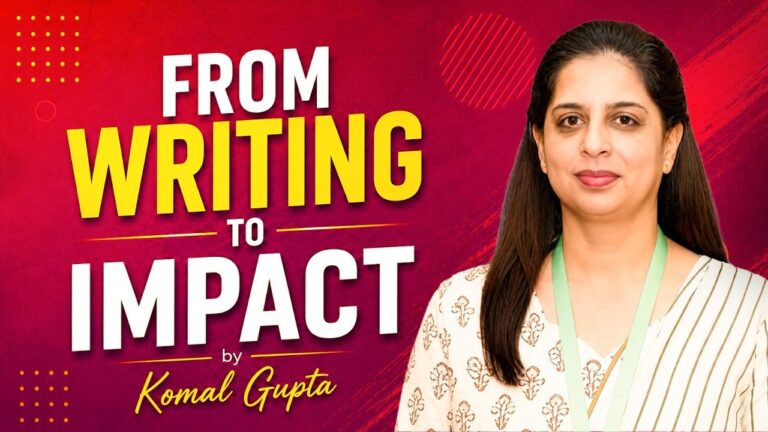
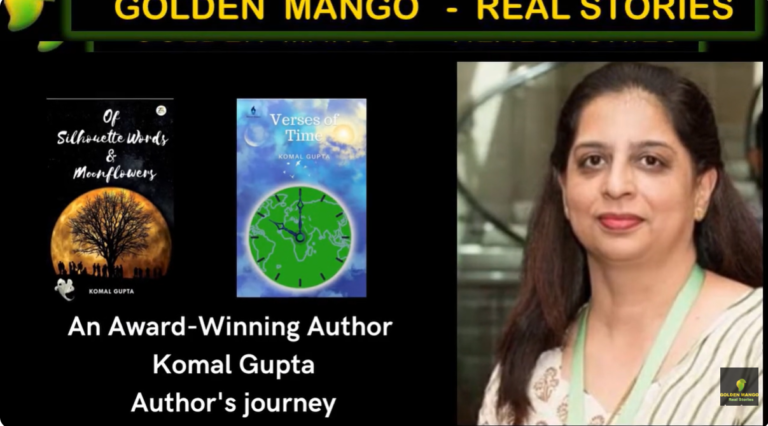
Interview : Komal Gupta

Watch this interesting interview conducted in Hindi on the GOLDEN MANGO – REAL STORIES by Sonika on YouTube.

Link to the interview.

https://www.youtube.com/watch?v=ZcFZDOfKMN8

I talk about my writing journey in this interview. It was recorded in 2022. I enjoyed the questions and had a great time answering in Hindi. Speaking in one’s mother tongue is always wonderful and everything flows in perfect sync. Hope you like the interview!

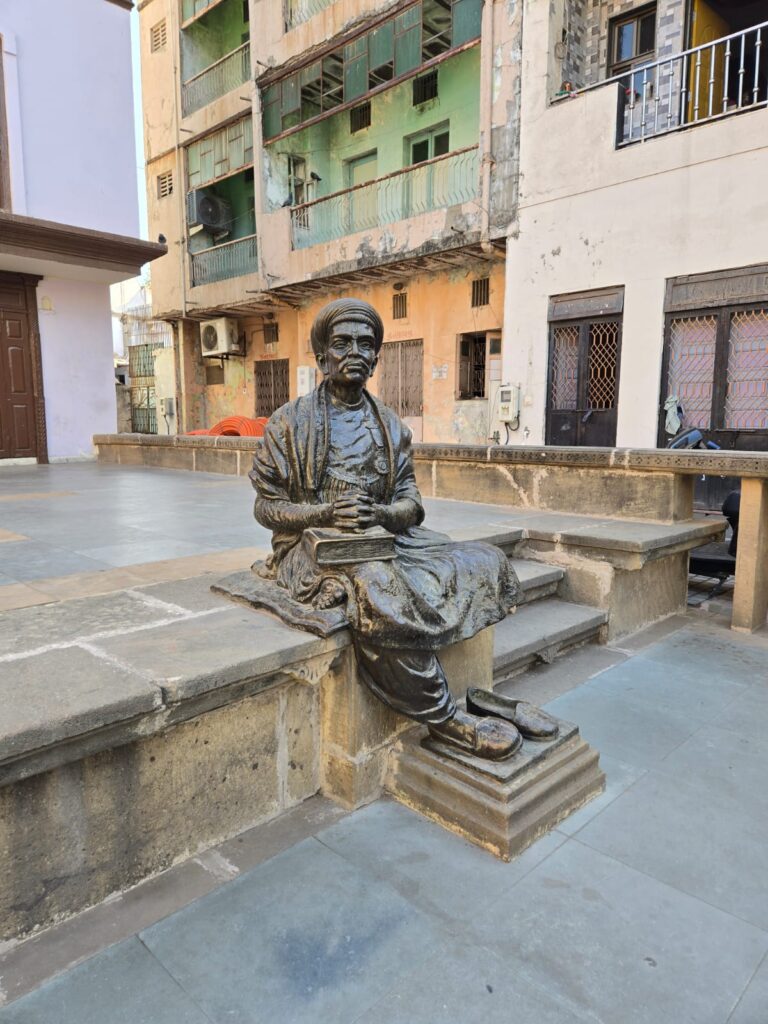
Ahmedabad -Pol moments in the Old City.

0

On World Heritage Day : Ahmedabad -Pol moments in the Old City.

Culture and heritage surrounds us. A little noticing, an observation, and a memory. A glimpse into the threads of time life weaves !

Read on Substack:

https://lnkd.in/gZ-Yvzq6

hashtagreconnectandreflect hashtagtejaswiniaura hashtagindia hashtagworldheritageday hashtagAhmedabad hashtagPolLife hashtagsubstack

The ‘Ellipsed Voice’: An Exploration of Voices.

0

The ‘Ellipsed Voice’

2 words. They straddle worlds.

As a poet, one often ruminates on silence and the unsaids, well hidden in plain sight.

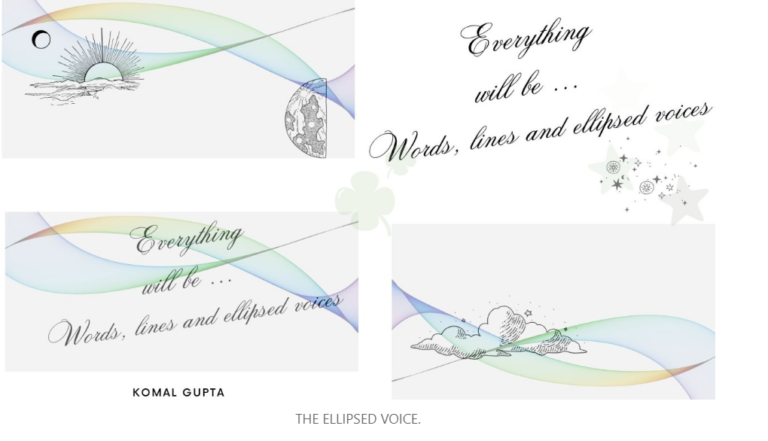
I wrote a quote about “an ellipsed voice” on the spur of the moment. And writing it left me with a sense of disquiet and curiosity.

The ‘ellipsed voice’, an impromptu discovery seemed to me, a central and pivotable element in a poet’s thought process. Indirectly shaping both the expression of emotions and offbeat candid observations in a subtle yet profound manner. My interest was piqued.

I am sharing the quote.

Article content

As poets and writers, we often encounter thoughts and words that remain free-floating and ethereal, so I began a deep dive into these two words, ” Ellipsed voice”. My research began!

An ellipsed voice can be a creative term inferred from related ideas, such as ellipsis in narrative or speech. This term has not been coined yet, so I am mighty chuffed that my thought ramblings led me to these 2 words.

In the literary context, an “ellipsed voice” can be a fascinating concept.

Since “ellipsed” isn’t a standard term, it can be framed as a voice shaped by ellipsis, the deliberate omission of words, thoughts, or details, to create meaning, mood, and character depth.

Here’s how it works:

In literature, an ellipsed voice could refer to a narrative or character’s way of expressing themselves where gaps are left intentionally. This mirrors the ellipsis (…) in writing, signalling something unsaid or trailing off.

For example:

  • Character Speech: A character with an ellipsed voice might speak in fragments or halt abruptly, hinting at inner turmoil or secrets. Think of Hemingway’s terse dialogue in The Sun Also Rises, where what’s left out: emotions, motives, they carry as much weight as what’s said. “I don’t know… maybe it’s better this way…” leaves the reader guessing.
  • Narrative Style: An author might employ an ellipsed voice in the narration itself, skipping over events or details to disorient or engage the reader. Virginia Woolf does this in To the Lighthouse, where time jumps and omitted explanations reflect the characters’ fragmented perceptions.
  • Symbolism: This voice could represent suppression or loss. In Toni Morrison’s Beloved, the ellipsed voices of enslaved characters, fractured by trauma, speak through what they don’t say as much as what they do, their silences echoing with history.
  • Ellipsed Voice in Sound or Performance – A voice that fades out, is partially heard, or is intentionally left incomplete in a play, song, or audio recording.

So an ellipsed voice can be said to be a literary device that thrives on absence. The ellipsed voice doesn’t just tell a story. It withholds parts of it, making the reader an active participant in uncovering what’s beneath.

“Ellipsed Voice” could be a powerful poetic or literary concept. It suggests a voice partially heard, faded, omitted, or deliberately left incomplete, much like an ellipsis in writing.

You could also explore this idea in different ways:

  1. As a Literary Device – A narrative or poetic voice that speaks in fragments, leaving gaps for the reader to fill in. Example: “She whispered, ‘I wanted to tell you…’ and the wind swallowed the rest.”
  2. As a Symbol – A metaphor for unheard voices, suppressed emotions, or lost words. Something that was meant to be spoken but never fully expressed.
  3. As a Concept in Sound and Performance – A voice that fades mid-sentence, echoes, or gets drowned by external noise, mirroring real-life interruptions or forgotten thoughts.

Here are some more interesting facets of an ellipsed voice, from the point of view of a poet.

The term “ellipsed voice” is not formally defined in standard literary or poetic resources, it can be described as a communicative style within poetry characterized by omission, where certain words, thoughts, or narrative elements are left unsaid, requiring the audience to infer meaning from the provided context.

An “ellipsed voice” in poetry is likely the poet’s style of expression that leaves out certain words or ideas, making the poem more suggestive and less direct. Imagine a poet saying, “I was going to tell you…,” and stopping there. The reader has to guess the rest.

This style is similar to “elliptical poetry,” where the poet uses omission to engage the reader, creating a sense of mystery or depth.

Why it matters for poets

For a poet, using an ellipsed voice means crafting poems that don’t spell everything out, encouraging readers to think and feel more deeply. It can be done by using pauses, incomplete thoughts, or leaving out details, like ending a line with “…” to suggest there’s more to say. This approach can make poetry more personal and open to interpretation.

While you might expect this to be just about grammar, an ellipsed voice can also show emotions, like hesitation or secrecy, making the poem feel more human and relatable, like real-life conversations where we don’t always say everything.

An Overview:

An ellipsed voice refers to a manner of communication, whether in speech, writing, or narrative that intentionally omits words, phrases, or ideas, relying on the audience to infer the missing elements. This concept draws from the linguistic and literary device of ellipsis (the omission of text, often marked by “…”), extending it to characterize a distinctive style or tone. The term “ellipsed” derives from “ellipsis,” a grammatical and literary concept meaning the omission of words or events that are understood in context (Ellipsis (linguistics).

In linguistics, ellipsis refers to constructions like “I’m going to the store, and you?” where “are going” is omitted but implied. Extending this to “voice” in poetry, an “ellipsed voice” likely refers to the poet’s individual style or manner of expression that incorporates such omissions, creating a narrative or emotional effect through what is left unsaid. It can be a creative term inferred from related ideas, such as ellipsis in narrative or speech.

For a lay person, think of an “ellipsed voice” as a poet’s way of talking through their poem that feels a bit incomplete, like when someone starts a sentence and then trails off, leaving you to guess the rest. It’s like saying, “The day ends…and I…” and stopping, making you wonder what they meant.

Key aspects include:

1. Purpose and Effects:

Brevity/Implicature: Streamlining communication by omitting redundancies (e.g., “She prefers coffee; he, tea”).

Realism: Mimicking natural speech patterns, where pauses, trailing off, or incomplete thoughts occur (e.g., “I thought you might… never mind”).

Suspense/Ambiguity: Creating tension or mystery by leaving gaps for the audience to interpret (common in literature or drama).

Hesitation/Uncertainty: Reflecting a speaker’s doubt or reluctance (e.g., “Well, I could… but maybe not”).

2. Literary and Narrative Use:

In fiction, characters with an ellipsed voice might seem enigmatic, introspective, or emotionally guarded.

Poets and authors use ellipsis to evoke rhythm, ambiguity, or layered meanings.

3. Cultural and Contextual Factors:

In sociolinguistics, indirect communication styles (e.g., avoiding direct statements for politeness) might align with an ellipsed voice.

4. Technical vs. Stylistic:

In syntax, ellipsis refers to grammatically acceptable omissions (e.g., “Who left?” “John [left]”).

Stylistically, it becomes a deliberate artistic choice to shape voice or tone.

Common confusion:

The term may sometimes be conflated with “elliptical voice,” which similarly emphasizes conciseness through omission.However, “ellipsed voice” specifically highlights the role of intentional gaps in shaping communicative style.

In essence, an ellipsed voice leverages omission as a tool to engage the audience’s imagination, deepen subtext, or mirror the fragmentary nature of thought and speech.

The Poetic Way:

Here is another viewpoint I have been mulling about, which fits into my poetic hardwiring and strikes a chord.

Ellipsed Voice in Terms of Discovery

An ellipsed voice in the context of discovery is the act of uncovering something that was always present but never fully revealed. It represents fragments of truth, lost narratives, and unfinished expressions. Words that were started but never completed, echoes that linger in time, waiting to be pieced together.

How it manifests in discovery:

  • Traces of the unspoken:
  • An old manuscript with missing pages – what was left out?
  • A conversation where someone stops mid-sentence – what were they about to say?
  • A half-remembered childhood story – was it real, or was something lost in memory?
  • Voices forgotten or overlooked:
  • A suppressed history, where only fragments remain.
  • The words of a poet, erased but still whispering through footnotes.
  • A painting covered by another layer, waiting to be uncovered.
  • Echoes in Time:
  • A song whose final verse was never recorded.
  • A letter where the ink fades before the message is clear.
  • A moment that could have changed everything – if only it had been completed.

Summing up:

An ellipsed voice is not absence. It is presence interrupted. It is the mystery of what could have been, the curiosity of filling in the blanks. It reminds us that discovery is not just about finding, but about reconstructing, imagining, and giving voice to what was lost or left incomplete.

Here is an example in a poetic thought:

“The past is written in fragments, half-lines, fading echoes, words left unsaid. But lean in close, listen… and the silence will tell you everything.”

Since “ellipsed voice” isn’t a standard term, I’ll interpret it as a way of communicating or expressing that involves leaving things unsaid, where the process of uncovering meaning becomes a journey of discovery for the listener or reader.

‘The ‘ellipsed voices’ that stay with us as we roam the pages and computer strokes of life.’

It can be said to be rooted in the concept of elliptical poetry, with characteristics like obscurity, ambiguity, and the use of suggestive language, it represents a fascinating way to look at words and the unsaids through a different lens of perception. For poets, it offers a way to engage readers through silence and suggestion, though its non-standard nature means it requires careful crafting to balance clarity and mystery. This dual role makes it a valuable lens for understanding both poetic expression and human communication.

As a poet and writer, I find the philosophical underpinnings and emotional overtones of an ellipsed voice alluring and worth exploring further in my writing journey. I am happy to have discovered these 2 words. Creativity is wondrous! As a writer and poet, one is often contemplating life and the writing process. I have tried to gather and put together some facts and examples regarding this concept. A Papyrus wanderer and Time’s Sentinel in search of the ellipsed voices in her writing. I will be exploring this topic further, so stay tuned!

Key References:

Asemic Writing in Asia Script, Gesture, and the Poetry of Meaning

0

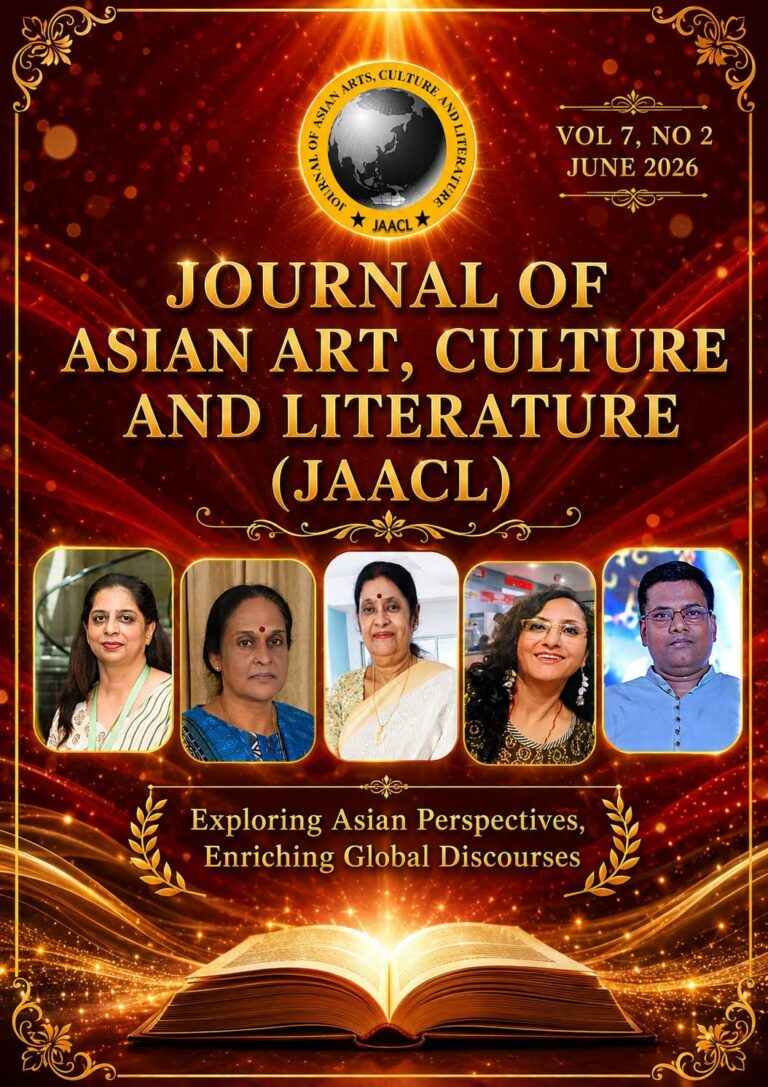
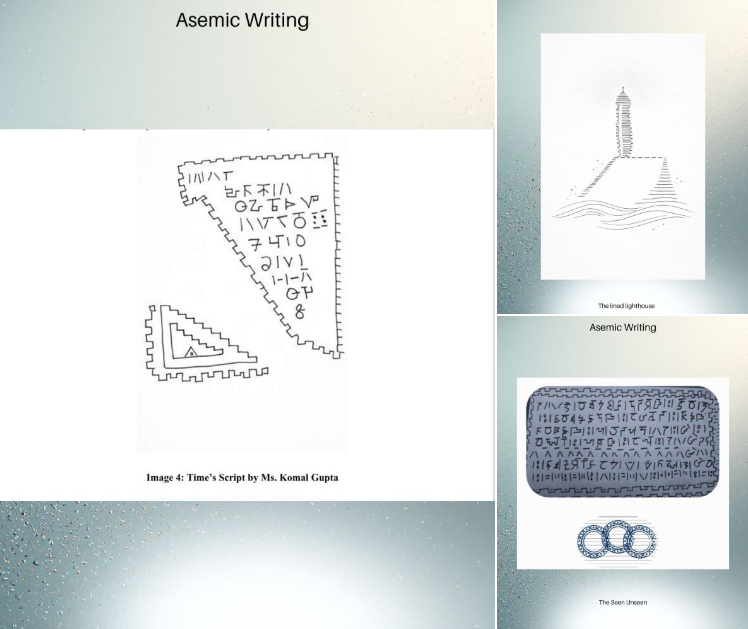
Happy to share that my article ‘Asemic Writing in Asia Script, Gesture, and the Poetry of Meaning’ has been published in the March issue of the Journal of Asian Arts, Culture and Literature (JAACL)- Asian Literary Society.

There are moments when writing takes you somewhere unexpected, and this article was one of them.

What began as an exploration of asemic writing slowly turned into a deep dive into the nuances of drawing and sketching that I had been intuitively working on these past few months, without knowing the direction or the ‘why’ of it. It seemed like a calling waiting to be understood. From meaning and language to something far quieter, lines that exist beyond words, asking to be understood on their own terms. Not read, not decoded, but simply felt.

As a writer and lately a budding artist 🙂 this journey opened a new space for me, one where the internal flow matters more than structure, where instinct shapes form, and where expression moves without the need for a script.

It made me pause and reflect: what happens when words fall silent?
Perhaps the lines continue? Free, unfettered, and mysterious.

In asemic writing, they take myriad shapes, find a soft rhythm, and begin to mirror life itself- fluid, evolving, and deeply intuitive. A world where expression is no longer bound to language, but carried through movement, form, and a quiet understanding.

Link to the article:
https://lnkd.in/gyvmh6we

Grateful for this enriching experience, and for stepping into a space where writing expands into something more: The Asemic- time seared marks intuitively expressed and sensed.

Onwards we go!

hashtagasianliterarysociety hashtagtejaswiniaura hashtagliteraryarts hashtagpapyriconnect hashtagindia hashtagartsandculture hashtagjaacl hashtagasemicwriting hashtagresearch hashtagasianart hashtagasianliterature hashtagmindfulness

Literary Proxemics: Mapping Space in Classical and Modern Indian Poetry.

0

Delighted to share that my article “Literary Proxemics: Mapping Space in Classical and Modern Indian Poetry” has been published in the Journal of Asian Art, Culture and Literature (JAACL)- December edition by the Asian Literary Society.

My sincere thanks to Manoj Krishnan for the opportunity. Researching and writing on literary proxemics—one of my favourite areas of inquiry as a poet—was an enriching and exhilarating experience. Exploring how space, silence, and placement function across classical and contemporary Indian poetry allowed a curious poet to ruminate, share knowledge and perspectives. Absolutely fascinating! 🙂

I invite you to read this piece along with many other insightful articles featured in the journal.

https://lnkd.in/gg5fwp_4

Happy reading.

Asian Literary Society
Manoj Krishnan

hashtagWriting hashtagIndianPoetry hashtagJAACL hashtagAsianLiterarySociety hashtagLiteraryProxemics hashtagProxemics hashtagResearch hashtagClassicalPoetry hashtagModernPoetry hashtagCulture hashtagSociety hashtagHumanity hashtagLiterature

Poetry, Peace, and Purpose: An International Recognition from Pathways to Peace.

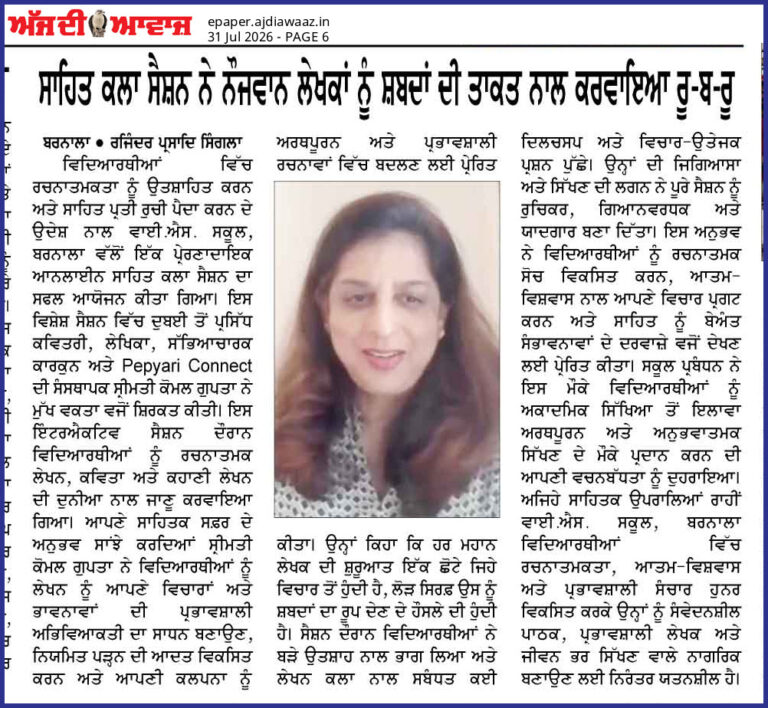
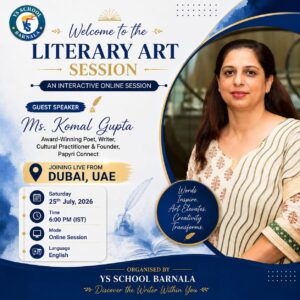
Komal Gupta Honored with 2025 Exceptional Women of Peace Lifetime Achievement Award

Poet, author, and cultural advocate Komal Gupta was honored with the prestigious 2025 Exceptional Women of Peace Lifetime Achievement Award by Pathways To Peace and the GEI Global Leaders initiative.

This global recognition was announced through the official Pathways To Peace and GEI Global Leaders award communication.

The recognition celebrates women across the globe whose work contributes significantly toward peacebuilding, cultural dialogue, community wellbeing, creativity, and social impact. Komal Gupta was recognized among an inspiring group of global changemakers, peace advocates, educators, and humanitarian leaders.

The virtual award ceremony took place on September 13, 2025, commemorating the United Nations Declaration and Programme of Action on a Culture of Peace. The international gathering brought together distinguished speakers, peace ambassadors, and leaders dedicated to fostering dialogue, empathy, and collective healing across communities.


Known for blending literature, poetry, wellbeing advocacy, and cultural leadership, Komal Gupta has consistently worked toward creating meaningful spaces for reflection, connection, and emotional wellbeing through the arts. Through her platform, Papyri Connect, and her contributions to literary and social initiatives, she continues to champion the transformative power of words and creative expression.

Her work spans poetry, community engagement, editorial contributions, workshops, and cultural collaborations that encourage introspection, resilience, and human connection in contemporary society.

Receiving the Exceptional Women of Peace Lifetime Achievement Award marks another significant milestone in her journey as a literary voice and advocate for creativity-led social impact.


For more information on the award and global initiative, visit the official communication:
https://myemail.constantcontact.com/Peace-Awards-Announced—Save-the-Date-.html?soid=1109726033203&aid=2u3HrC3fX44

The official communication in the Pathways to Peace Newsletter.

Peace Awards Announced – Save the Date!

CONFERMENT OF LIFETIME ACHIEVEMENT AWARD 2025 BY PATHWAYS TO PEACE.

Happy to share that I have been awarded the Lifetime Achievement Award for Peace by Pathways To Peace (PTP), an international Peacebuilding, educational, and consulting organization.


A UN-designated Peace Messenger Organization with Consultative Status at ECOSOC and the Department of Global Communications, Pathways To Peace has been at the forefront of building a Culture of Peace around the world for four decades.


Thank you, Pathways To Peace, Haileigh Peterson, Tezikiah Gabriel and the PTP Team for this honor.


I am especially honored to be part of PTP’s Exceptional Women of Peace Awards program, which recognizes women in diverse fields worldwide using their voice and presence to create positive change and build lasting peace.


For me the award represents a journey through poetry, literature, wellbeing, women’s empowerment, and cultural initiatives. Peace lives in words, art, in empathy, and in the spaces we create for voices to connect, express, and be heard.


Receiving this award reinforces my commitment to keep nurturing dialogue, compassion, and creativity in building a culture of peace and empathy. It is a wonderful milestone in my journey. This award is also a reminder of the power of words, art, empathy, and powerful impact of women’s voices in shaping peace and culture.

I carry it with deep gratitude to my community, fellow changemakers, and friends who walk this path with me and with excitement for all that is still waiting to be created, shared, and lived.

Learn more about the incredible impact of Pathways of Peace and the program:
https://pathwaystopeace.org/…/exceptional-women-of-peace


The Exceptional Women of Peace Award Ceremony. Lifetime Achievement Award Acceptance speech by Founder of Papyri Connect Komal Gupta.
 
 
Link to the Award Ceremony.

https://youtu.be/_tQ3R0tc5hQ?si=rtjsiN91U_owNO5m


Poetic Lines- Words and their Mysteries. A video on poetic forms ( Napowrimo 2024)

Delighted to have received this certificate of appreciation from Penmancy on the completion of the #PocketPoems 4.0,15 days challenge in #napowrimo2024.

It was an engaging experience, learnt so much and enjoyed the process!

I was enthralled by the process of writing the poetic forms and made a video for the same.

Enjoy!


#tejaswiniaura #poetry #india #writings #pocketpoems #penmancy #napowrimo2024 #words